When the future feels shaky...
The most reliable buffer is strong local fabric.

Hey there,
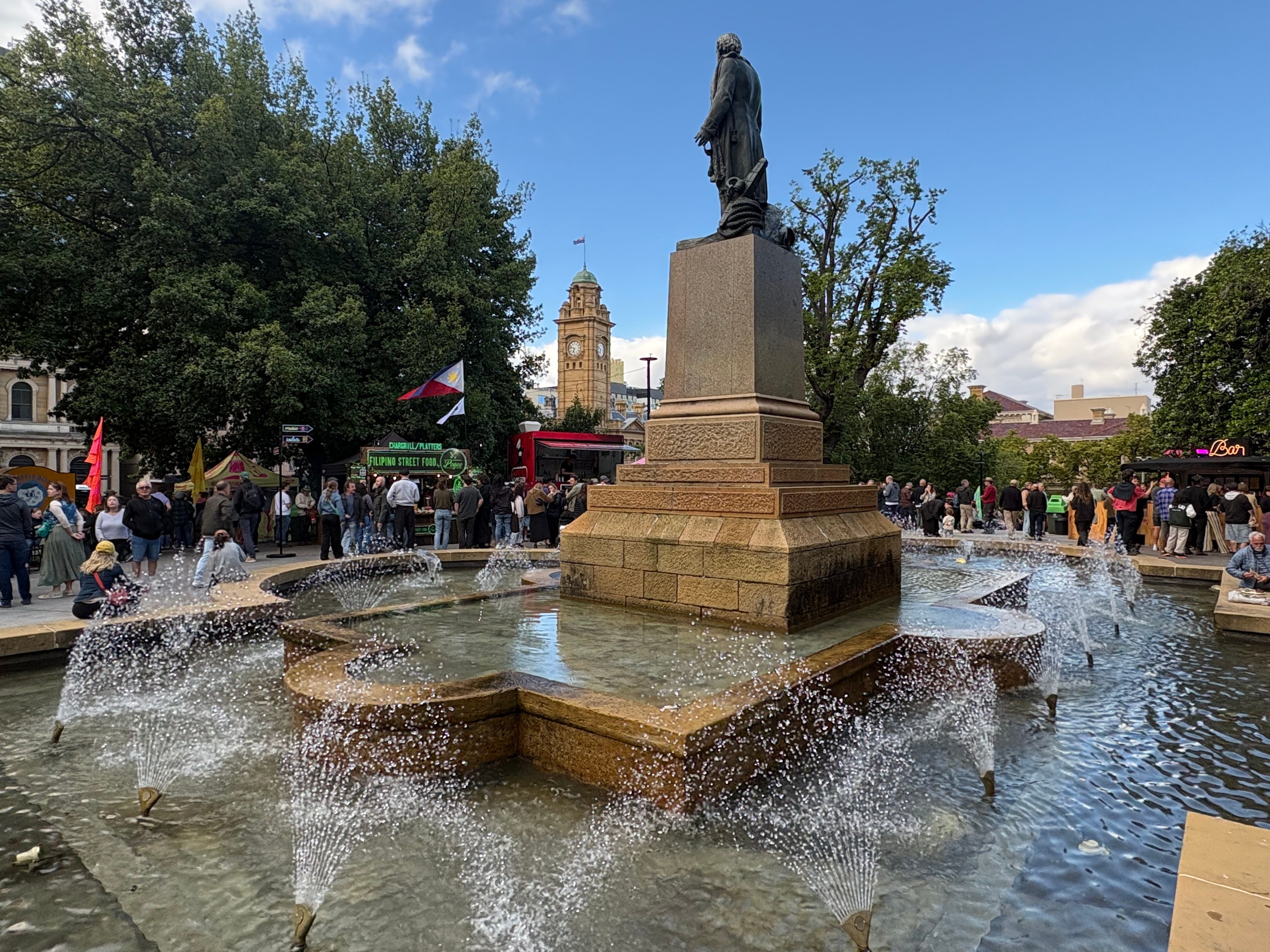
When I think about what anchors me right now, I picture scenes like this, a public square, a fountain, people milling around, civic life happening in real time.
One night in Washington, DC, I watched a 20-year-old student candidate win an Advisory Neighbourhood Commission race by a handful of votes, after months of organizing across campuses and pleading with friends to drag their roommates to the polls.
That campaign was part of DC Students Speak, a student advocacy group I cofounded in university. We helped elect seven students to hyperlocal roles with real influence over neighbourhood decisions.
It left me with a simple belief. When the future feels shaky, the most reliable buffer is not a perfect plan, it is a strong local fabric. People who trust each other, institutions that work, and a shared sense that problems can be solved together.
That is why I am excited to share that I am joining the Shorefast Institute as a Senior Advisor, supporting government relations, policy development, and fundraising. This is an advisory role, so I will also be working on a few other projects this year, more soon.
Over the past year, I have gotten to know Zita Cobb and the Shorefast team, and I have genuinely enjoyed it. What they have built is remarkable.
I respect how seriously Shorefast recognizes the strengths every community already has, culture, identity, local knowledge, relationships, natural beauty, and pride. Their approach starts with those intangible assets, then builds an economy that fits the place, so prosperity strengthens what makes the community itself worth staying in.
If this was forwarded to you, use the subscribe button below to join over 2,000 subscribers. Each month I share ideas, tools, and books that help you thrive in an uncertain world.
As things speed up, here’s what I’m paying attention to this month.
The best articles I read this month
If you only read one this month, read Amodei.
The Adolescence of Technology: Confronting and Overcoming the Risks of Powerful AI
Most AI commentary is either hype or doom. This is neither. It is a sober argument from Dario Amodei, CEO of Anthropic, on what could go wrong sooner than people expect, and what it would look like to respond like adults. Be forewarned - this piece is long but excellent.
Intelligence Is Getting What You Want Out of Life
A sharp gut check if you feel like you are doing well but not feeling good. The core idea is that you can be winning a game you do not care about, then wonder why the payoff feels empty.
Why Aren’t Smart People Happier?
Great framing, intelligence helps with well-defined problems, but most of life is not well defined. There is no agreed scoreboard, so being smart does not automatically make you happier or wiser.
Claude Code and What Comes Next
This captures why coding agents feel like a real shift, not a new toy. If you want to understand what AI that does work looks like, this is a clean entry point.
A surprisingly useful lens on friendship through Aristotle’s three types, pleasure, utility, virtue. It will make you rethink who you are skipping over, and why.
The best books I read this month
The Loneliness of Sonia and Sunny, Kiran Desai
A quiet, piercing novel about what it feels like to move between worlds and never fully belong to any of them. It is also honest about how trauma travels with you, even when your life looks “successful” from the outside.
Flesh, David Szalay
A fast, unsettling read that keeps pressing the same question, how much of your life is choice, and how much is impulse dressed up as a story you tell yourself later. People call it a book about masculinity, and that is in there, but the deeper thread is appetite, shame, and self deception.
Politics on the Edge, Rory Stewart
Stewart is at his best on the practical side of governing, how incentives, bureaucracy, and delivery actually work. The book is a clear diagnosis of why many democracies struggle to do the basics well, and how that failure corrodes trust.
Concept I’m considering
The purpose of a system is what it does, not what it claims to do.
Stafford Beer’s point is simple. If a system reliably produces a certain outcome, that outcome is its real purpose, even if everyone involved has good intentions. If you want the output to change, you have to change the incentives, rules, or feedback loops that produce it.
A quotation I cannot shake
“Death is the moment when somebody comes and says: You know those three things that you’ve always thought of? They’re not true. You’re not permanent, you’re not the most important thing and you’re not separate. So, I think about it a lot, but I find it a joyful thing, because it’s just a reality check.” -George Saunders
One last thought
It feels like we are living through a genuine inflection point. Prime Minister Carney’s Davos speech hit a nerve because it named what many people are sensing, the ground is shifting.
Amodei’s essay took me close to two hours to read, and it genuinely rattled me. Since GenAI tools arrived only a few years ago, the pace has been staggering. It feels like we are entering a new era, and a lot hinges on whether our institutions, incentives, and norms can keep up.
All that is to say, the purpose of this newsletter, sharing ideas and tools that help you stay steady and make good decisions in uncertain times, feels more important than ever.
Thanks to everyone who replied to the last edition. It was the most read one to date, and I really appreciated the thoughtful notes.
Until next time,
Scott
Lately I’ve been thinking about how building community can be an antidote to all the uncertainty around us. Love the way you also captured this sentiment.
Great summary - appreciate your perspective. :)